Editorial policy
How Zebra publishes
Every Zebra article is written to clarify tracking, appointment preparation, and doctor-ready reporting without making diagnostic or treatment claims.

Zebra
For invisible chronic illness
Author
Zebra Editorial Team translates chronic-illness research, customer language, and product workflows into practical guidance for symptom tracking, appointment preparation, and doctor-ready reports.
Editorial policy
Every Zebra article is written to clarify tracking, appointment preparation, and doctor-ready reporting without making diagnostic or treatment claims.
Research methodology
Content is based on Zebra product truth, customer language, community research, and reputable medical references when definitions or condition context require them.
Review process
Each page is reviewed against product accuracy, customer language, medical-language safety, and search-intent usefulness before publication or refresh.
Update policy
Pages are reviewed when product workflows change, when canonical research documents are updated, or when the editorial team finds accuracy gaps.
Sources policy
Product claims must match canonical Zebra documents. Medical context should be cautious, referenced, and limited to explanation rather than advice.
Citation standards
Condition definitions and medical context should rely on reputable sources, while product behavior must cite Zebra’s canonical product and operating documents.
Medical disclaimer
Zebra content supports self-organization and care conversations. It does not diagnose, treat, or replace medical advice.
Content freshness
Published pages display updated dates and should be refreshed when product features, medical language safety, or search intent changes materially.
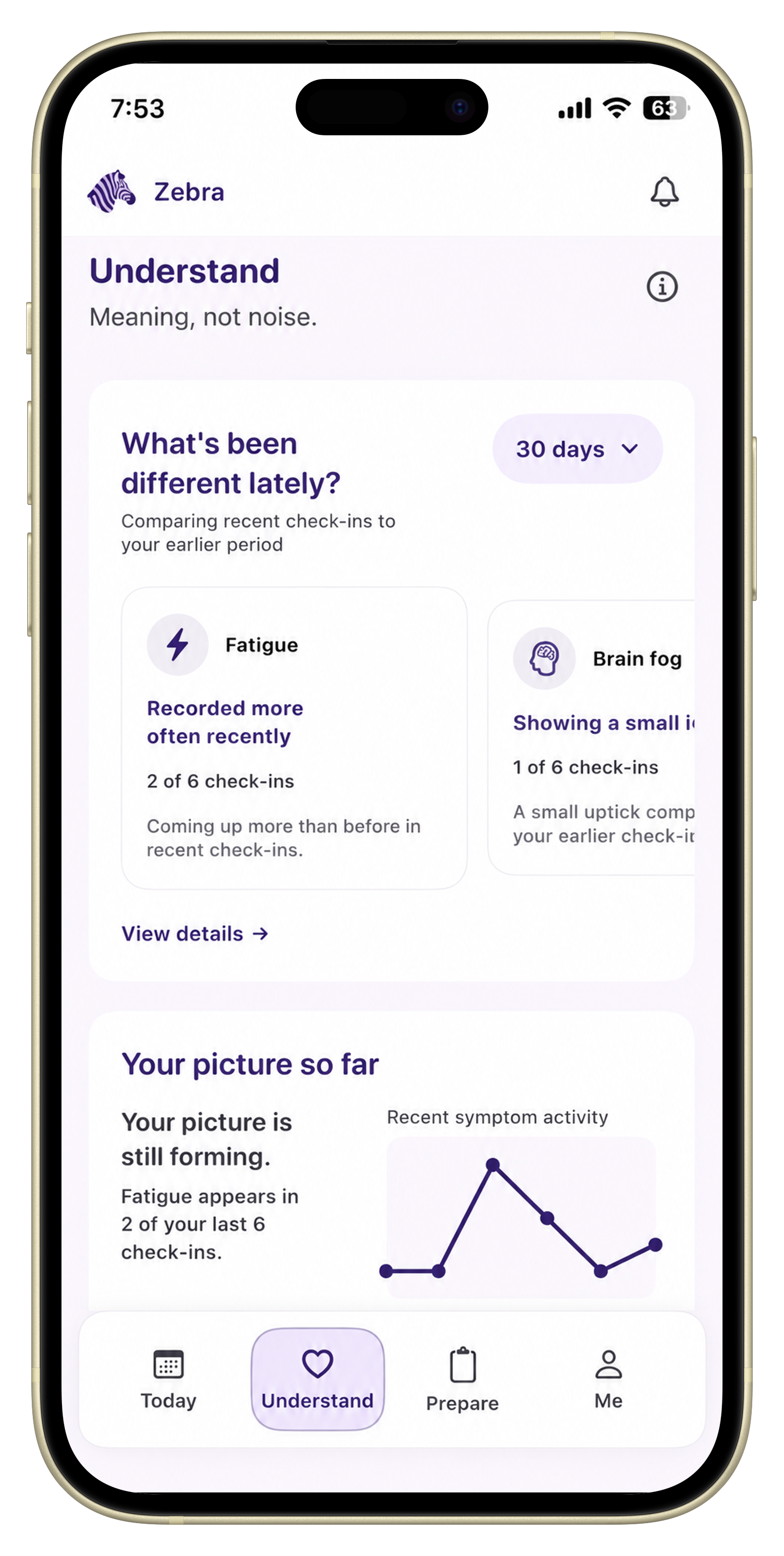
Compare Bearable and Zebra to see which is better for generic symptom tracking, overlap conditions, and appointment prep.
A practical guide to choosing the best app for autonomic symptom tracking and reviewable appointment history.
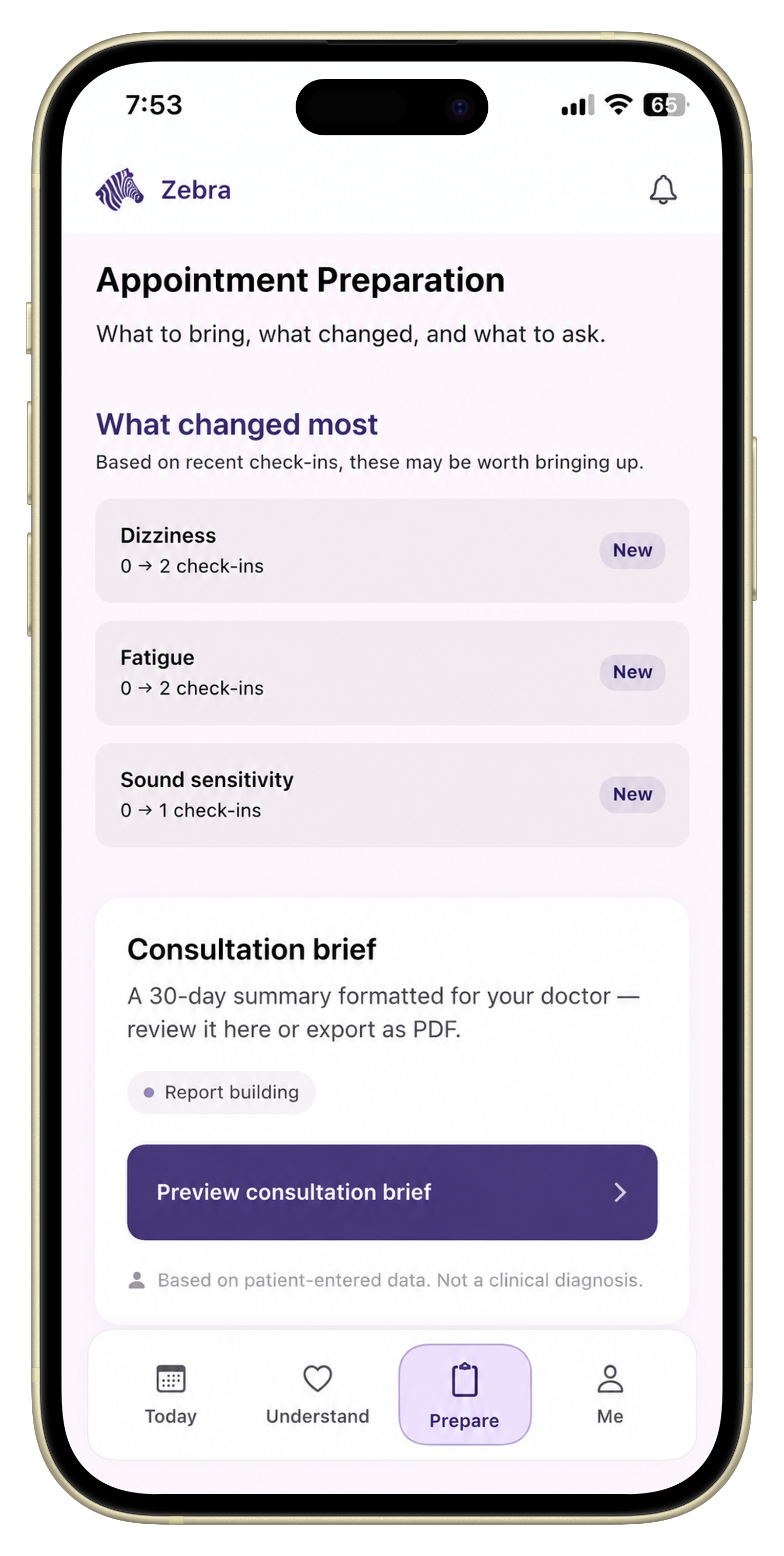
A practical guide to choosing the best app for dysautonomia cardiology appointment preparation.
A practical guide to choosing an app for orthostatic symptom tracking and reviewable appointment history.
A practical guide to choosing the best app for POTS cardiology appointment preparation.
Compare the best symptom tracker apps for POTS in 2026, including Zebra, Bearable, Visible, and Notes-based workarounds.
A practical comparison of dysautonomia symptom tracker options and what each is best at.
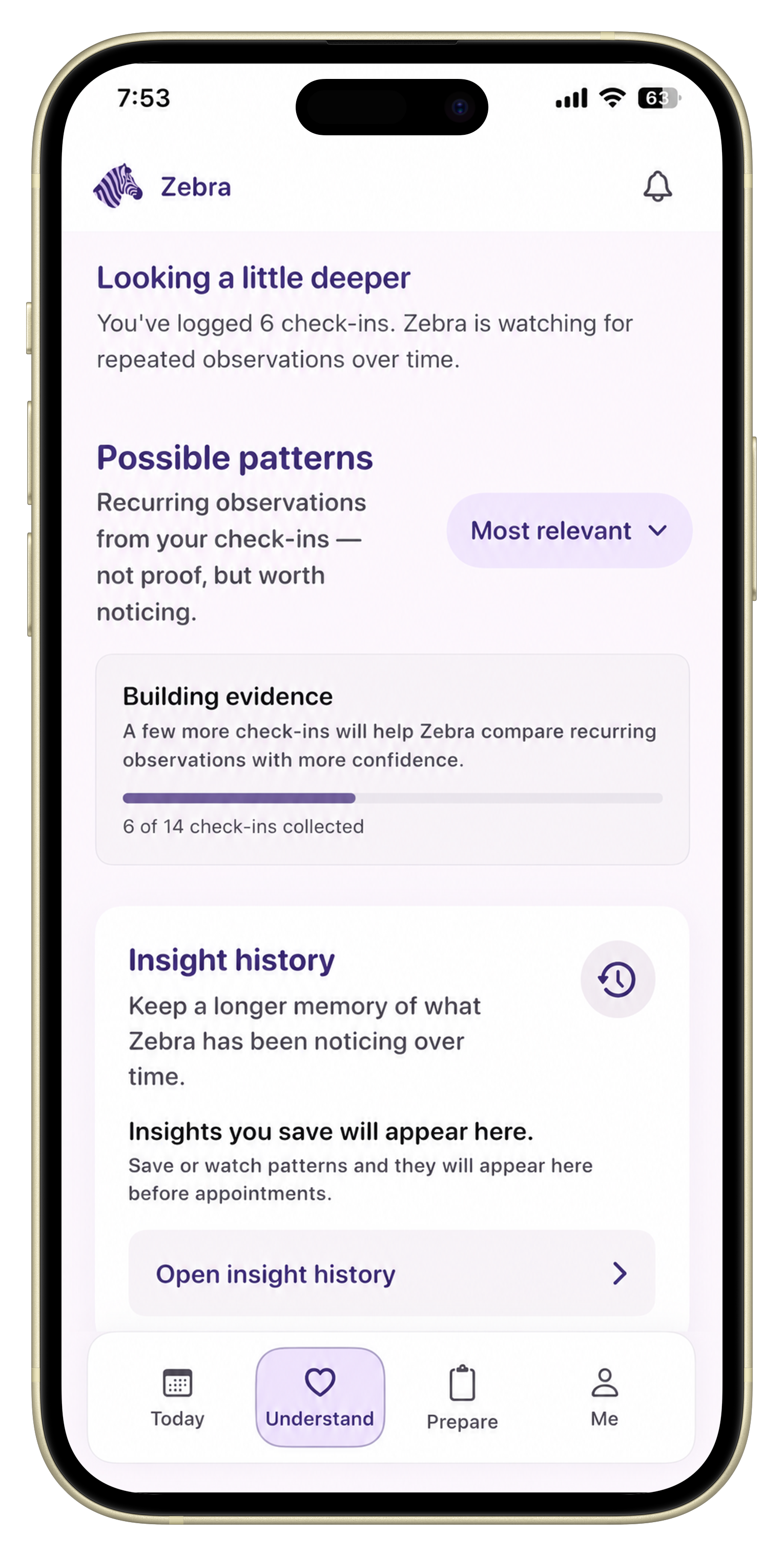
A practical guide to choosing the best symptom tracker for EDS and dysautonomia overlap.
A practical guide to choosing the best symptom tracker for orthostatic intolerance.
A pillar guide to choosing a symptom tracker for POTS, dysautonomia, EDS, and overlapping chronic illness symptoms.
A practical guide to choosing the best symptom tracker for upright intolerance and position-related symptoms.
A practical explanation of EDS and dysautonomia overlap, plus how to keep the symptom history reviewable.
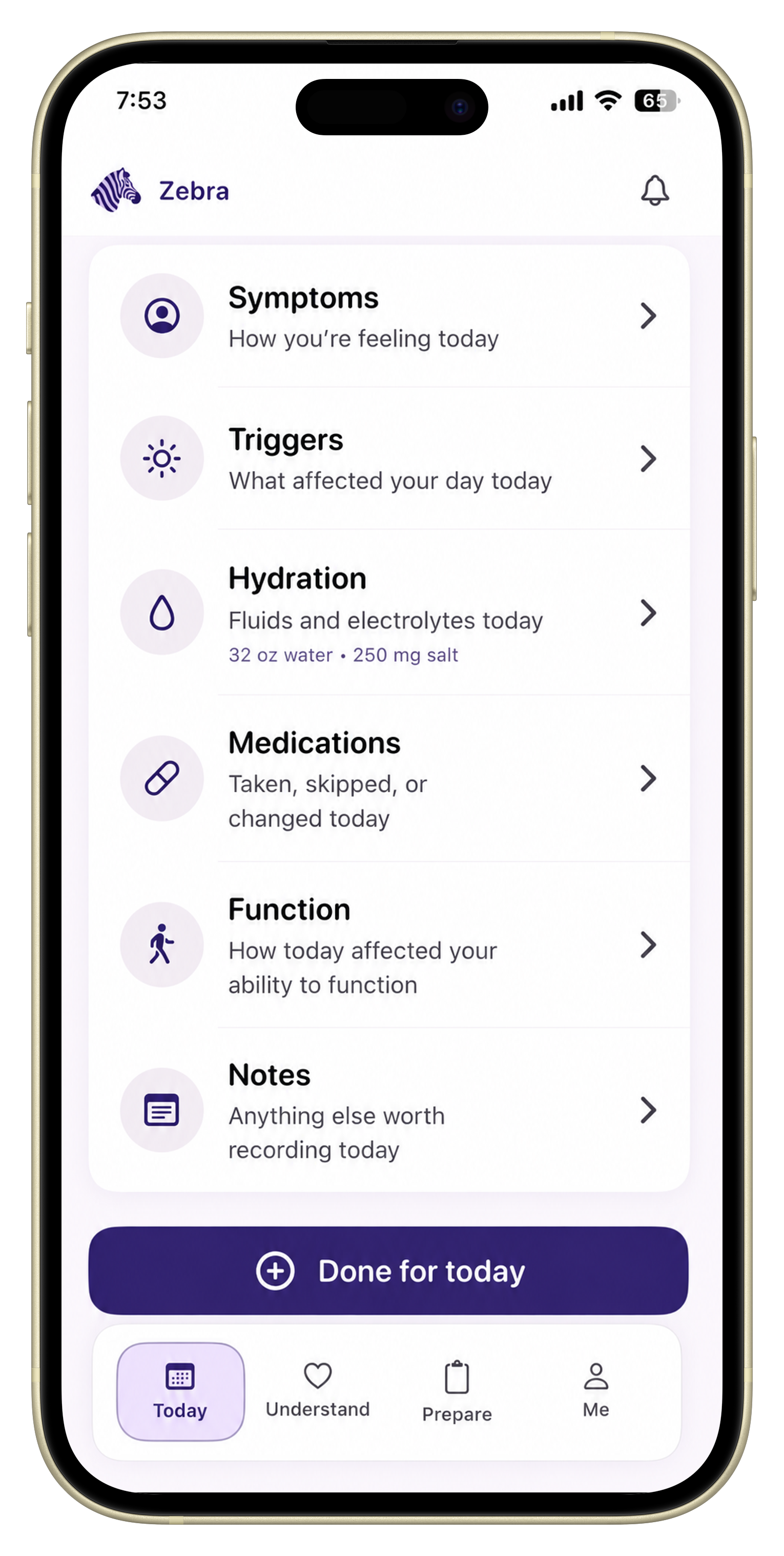
Learn how to keep a symptom journal with brain fog using a low-effort, structured system that still helps before appointments.
Learn how to organize symptom history, medications, function changes, and questions into a clear doctor-visit summary.
A simple framework for turning a month of symptom tracking into a clearer appointment-ready summary.
Learn how to summarize symptoms clearly for appointments without losing the details that matter most.
Learn how to track brain fog symptoms, function changes, and context so the history is easier to explain at appointments.
A practical workflow for keeping EDS and dysautonomia overlap symptoms in one clear, usable record.
A practical framework for tracking how symptoms affect daily life before a doctor appointment.
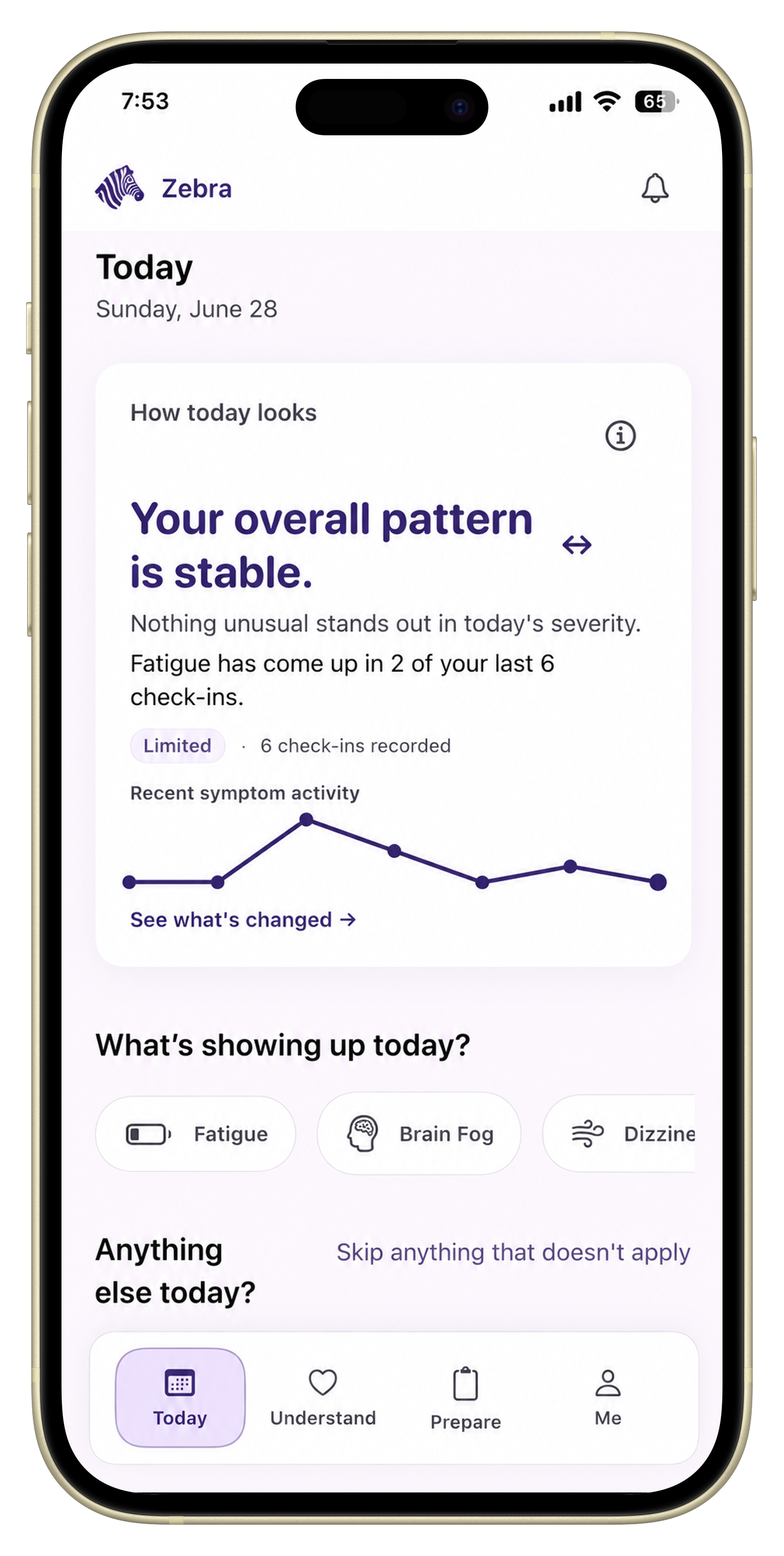
A practical guide to tracking hydration, salt, compression garments, and symptom context in one useful chronic illness record.
A low-friction guide to tracking ME/CFS symptoms, delayed crashes, and daily function without making the process harder to sustain.
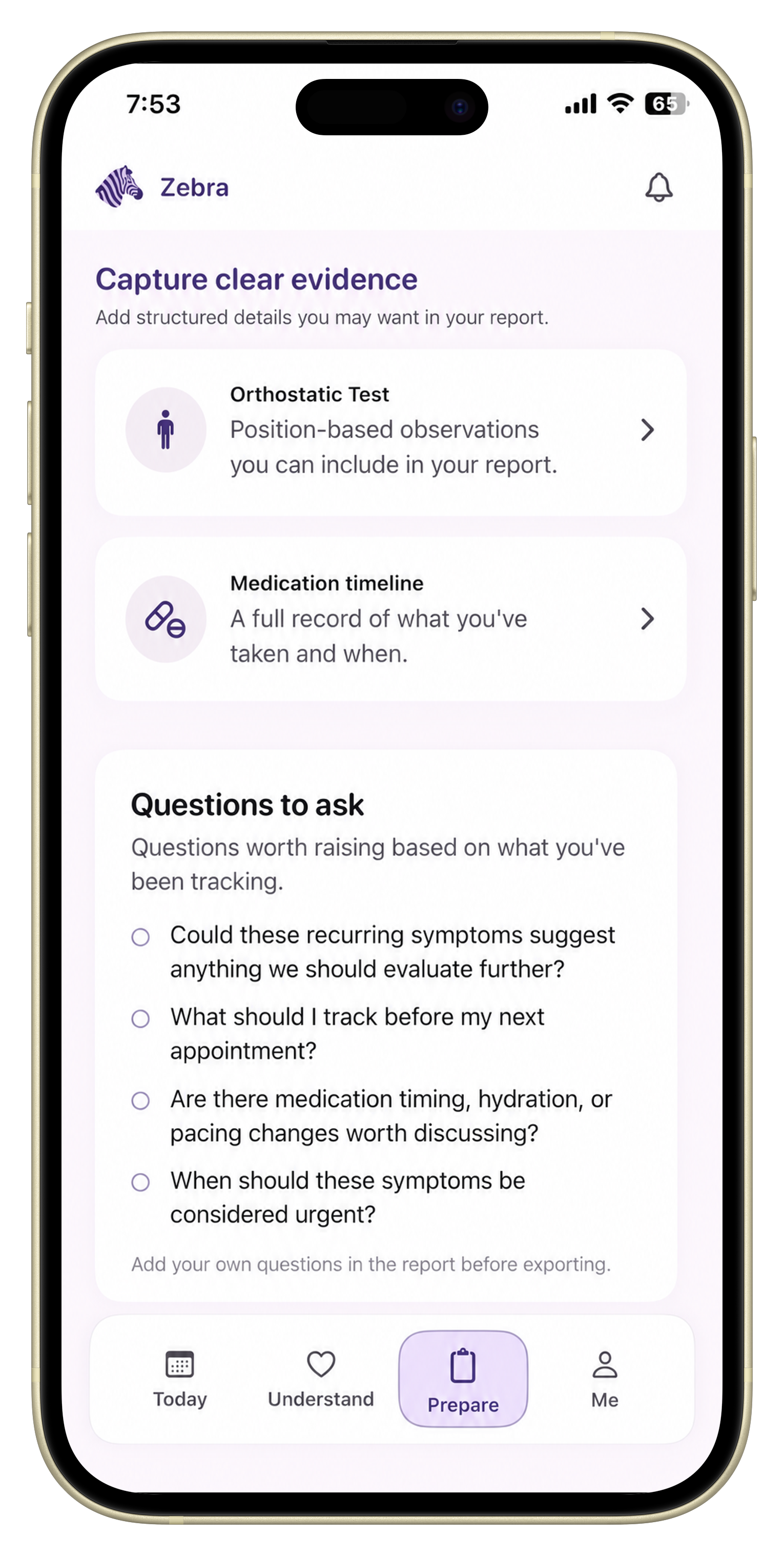
A practical guide to keeping medication changes, flares, symptoms, and questions in one reviewable record.
Learn how to track POTS symptoms, upright changes, flares, and relevant home observations in one clear history.
Learn how to track salt, fluids, flares, and symptoms in one clear record without creating more daily overwhelm.
A practical comparison of POTS and orthostatic tachycardia, plus what to track when you need a clearer doctor-ready history.
A practical specialist-appointment checklist for chronic illness, including symptom summaries, medications, questions, and timeline prep.
A practical guide to choosing a symptom tracker that helps before specialist and follow-up appointments.
Compare symptom trackers, notes apps, and spreadsheets to see which works best for chronic illness tracking and appointment prep.
Learn how to turn symptom tracking into doctor-ready proof with a simple framework for symptoms, flares, function, and appointment prep.
Learn what an orthostatic test helps you record and why position-based observations are more useful when kept with symptom history.
Learn what a doctor-ready symptom report is, what it should include, and why it helps with chronic illness appointment prep.
Learn what a symptom journal is, what belongs in one, and why structure matters for chronic illness tracking.
A simple explanation of orthostatic intolerance, upright symptoms, and why position-related tracking can be useful.
A practical POTS cardiology appointment checklist covering symptoms, orthostatic observations, medications, salt, hydration, and questions.
Learn what to track before a specialist appointment, including symptoms, flares, medications, function changes, and your top questions.
A practical checklist for tracking the symptoms, changes, and questions that make an EDS specialist appointment more useful.
Learn why POTS, EDS, and Fibromyalgia symptoms often overlap and why that makes tracking and appointment prep harder.
Learn why symptom tracking often falls apart on bad days and how a lower-effort approach can make it more sustainable.
A practical comparison of Zebra and Bearable for people tracking POTS symptoms and preparing for appointments.
A practical comparison of Zebra and Visible for pacing, symptom tracking, and appointment preparation.